
Our Approach
A considered approach to performance and wellbeing.
The programmes rest on six working ideas. They explain why the schedule looks the way it does: why there is a mountain day, why there is a sauna, and why the work carries on for 90 days after you leave.
01
Recovery and performance
Senior roles rarely let up. The decisions keep coming, and the hours tend to stretch to fit them. Most people can sustain that for a while, and many do it well.
What tends to slip is recovery: sleep, time to think, time away from being needed. Over a long period that shows up in how people feel and, often, in how they lead. We think recovery deserves the same attention people give to the work itself.
02
The value of stepping away
It is hard to look at how you are working while you are in the middle of it. A few days away from meetings, messages and familiar routines makes it easier to slow down and notice things that usually get pushed aside.
Distance also tends to help with perspective. Problems that feel pressing at a desk can look different from further off.
03
Nature and environment
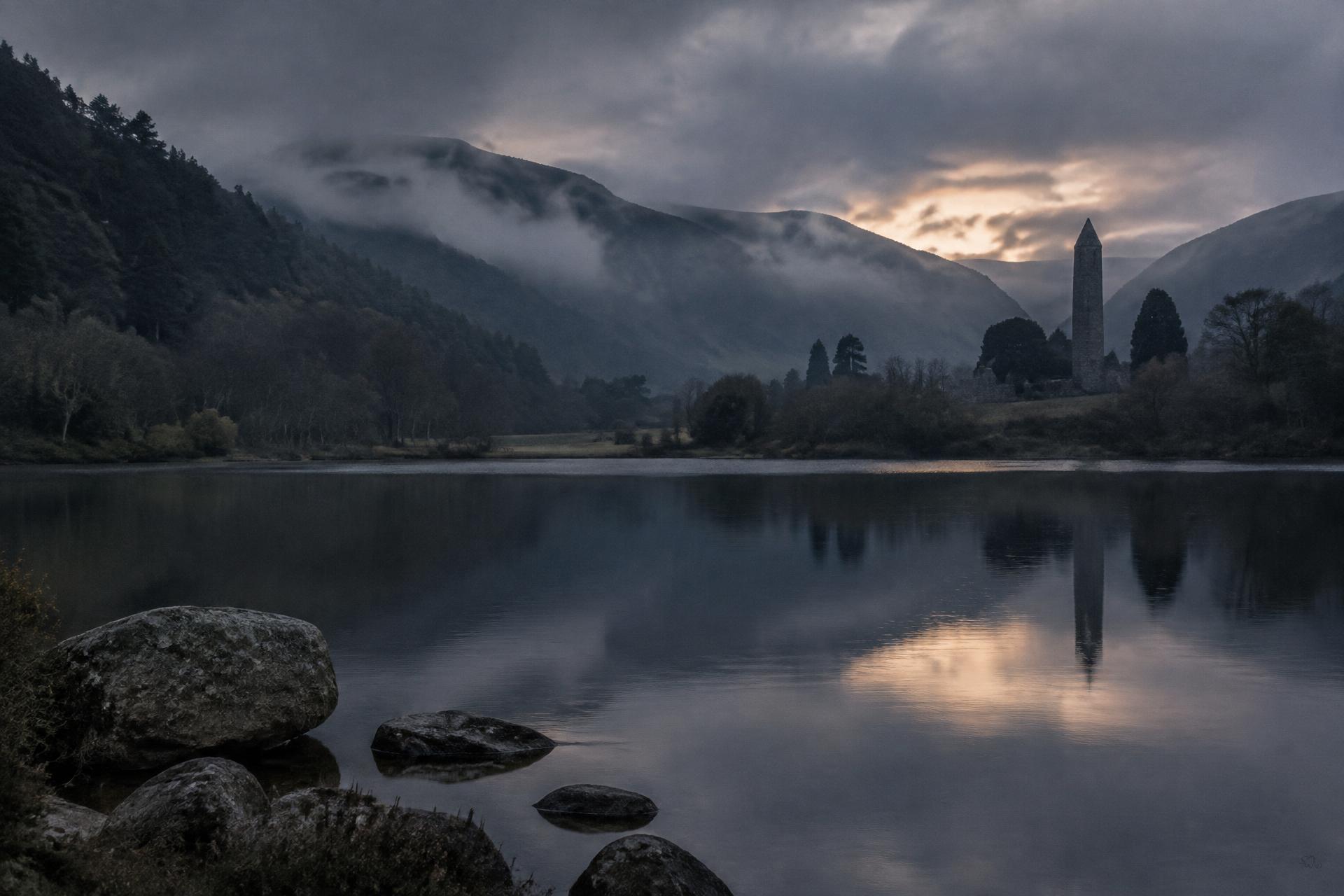
The Irish landscape is part of the experience because of what it asks of you, which is not much. Open space, weather and quiet give people room to think without competing for their attention.
There is a body of research on time in natural settings and attention, including the work of Rachel and Stephen Kaplan. We find it useful, and we are careful not to claim more for it than it shows.
04
Guidance and reflection
Time away is more useful with good company. Our facilitators bring experience in leadership development, coaching and outdoor practice. Their job is to structure the time, ask useful questions and help each person look honestly at how they lead.
We do not provide clinical or medical treatment.
05
Time outdoors
The walks, the time outdoors and the cold water are included for a reason. Physical effort and quiet places tend to change the quality of conversation and reflection. Participation is always at each person's own pace, and every activity is optional.
06
Bringing it home
What matters most is what people take back with them. Towards the end of the programme, participants work through what they want to do differently and how to make room for it in their working week.
Follow-up conversations after the programme help those intentions hold up once ordinary life resumes.
The Science We Draw On
What pressure does to the brain, and why we build recovery in.
The Inner Edge opens with a core session led by Marc Evans on the neuroscience of stress: the threat response, cortisol, and what long periods of pressure do to attention and decision-making. Understanding what has been happening is the starting point for everything else in the week.
Neuroscience already shapes how Marc coaches. He uses it to help leaders see the patterns behind their own reactions under pressure, and the research below explains why the week is built the way it is.
What sustained pressure does
Short bursts of stress are useful. They sharpen attention and help us act. The problem is pressure that never switches off. Bruce McEwen called the cumulative cost of that 'allostatic load': the wear that builds up when the body's stress systems stay switched on for months or years. [1]
Why it shows up in how people lead
The prefrontal cortex handles planning, judgement, self-control and holding several things in mind at once. Research by Amy Arnsten and others shows it is one of the first parts of the brain to suffer under ongoing stress, while faster, more habitual responses take over. For a leader, that can look like shorter patience, narrower thinking and more reactive decisions. [2]
Why recovery matters
These effects are not necessarily fixed. In one study, people under a month of heavy pressure showed weaker attention and changes in prefrontal activity, and both had largely returned a month after the pressure eased. It was a small study, and we don't claim five days does the same. It does show why recovery belongs in the design rather than being left to chance. [3]
Why sleep, breath and the outdoors are on the schedule
Lack of sleep reliably dulls attention, judgement and emotional control. Slow, controlled breathing has measurable effects on heart rate and arousal, and a 2023 Stanford trial found five minutes a day of structured breathing improved mood and lowered resting breathing rate. A walk in a natural setting has been shown to reduce rumination compared with an urban walk. These are the reasons the days include sleep, breathwork, sauna and time in the hills. [4, 5, 6, 7, 8]
We use this research to explain why the programme is designed the way it is. It is not a promise of particular results, and we do not provide clinical or medical treatment.
- McEwen BS. Protective and damaging effects of stress mediators. New England Journal of Medicine, 1998; 338: 171–179.
- Arnsten AFT. Stress signalling pathways that impair prefrontal cortex structure and function. Nature Reviews Neuroscience, 2009; 10: 410–422.
- Liston C, McEwen BS, Casey BJ. Psychosocial stress reversibly disrupts prefrontal processing and attentional control. PNAS, 2009; 106(3): 912–917.
- Killgore WDS. Effects of sleep deprivation on cognition. Progress in Brain Research, 2010; 185: 105–129.
- Zaccaro A et al. How breath-control can change your life: a systematic review on psycho-physiological correlates of slow breathing. Frontiers in Human Neuroscience, 2018; 12: 353.
- Balban MY et al. Brief structured respiration practices enhance mood and reduce physiological arousal. Cell Reports Medicine, 2023; 4(1): 100895.
- Bratman GN et al. Nature experience reduces rumination and subgenual prefrontal cortex activation. PNAS, 2015; 112(28): 8567–8572.
- Kaplan S. The restorative benefits of nature: toward an integrative framework. Journal of Environmental Psychology, 1995; 15: 169–182.
Next Step